
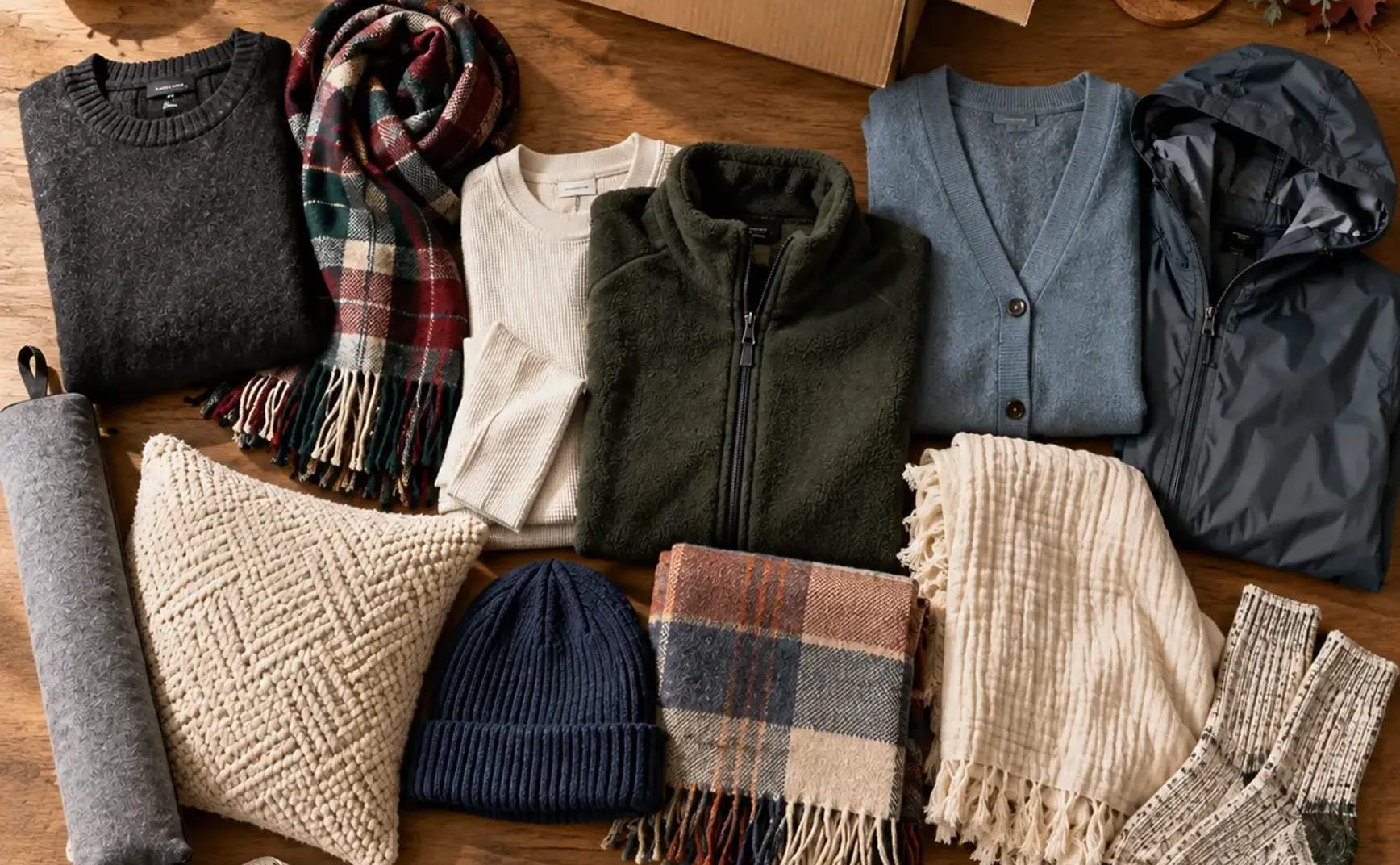
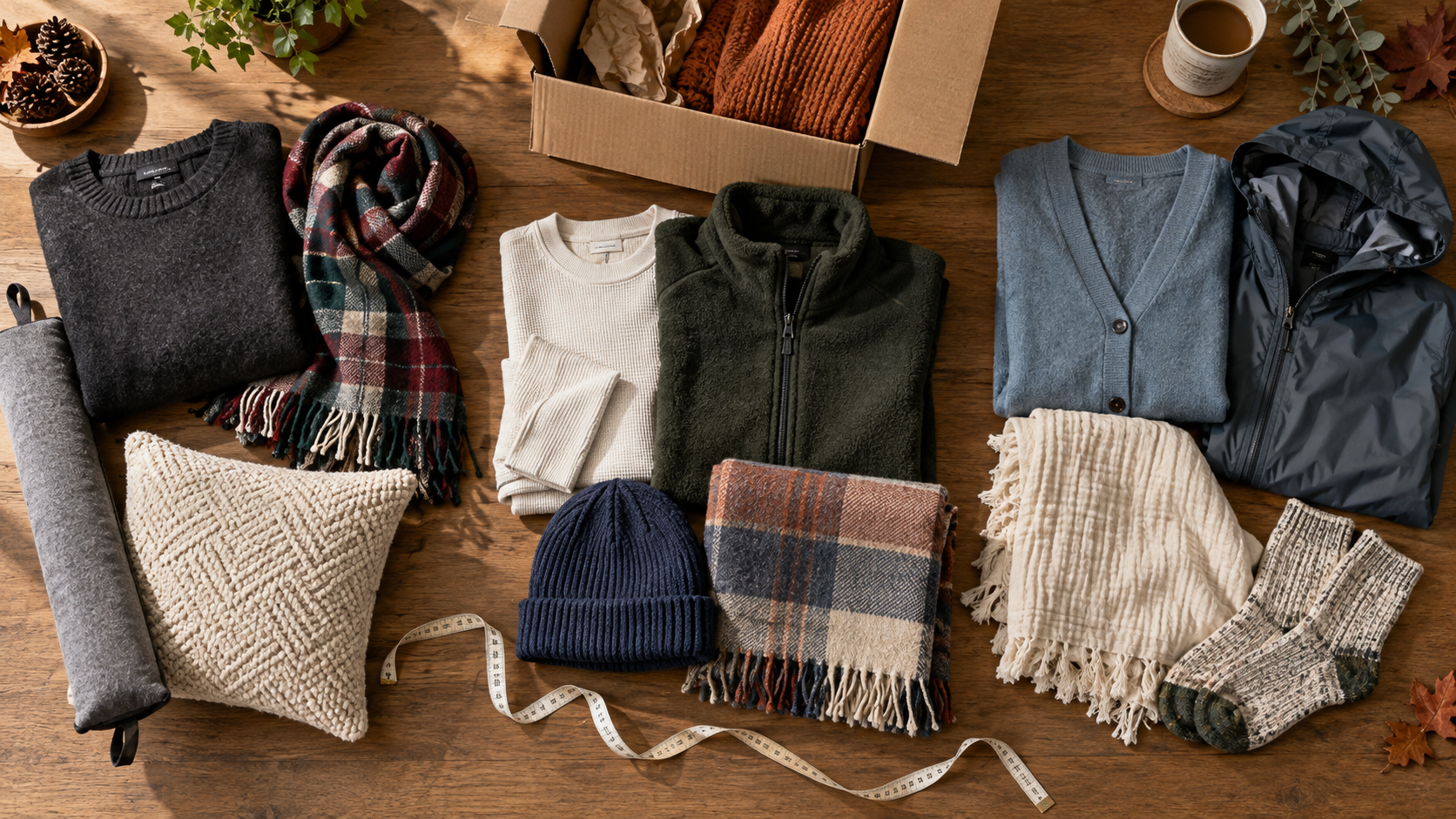
As soon as fall arrives, Taobao fills with fleece lining, cold-weather gear, and “fall and winter essentials.” From the United States, it is easy to turn those labels into one nationwide shopping list: a thick sweater, a thick comforter, and thick curtains, with the assumption that more insulation must be safer.
But “fall in the United States” is not one kind of weather. Coastal Boston and inland Massachusetts have different nights. The Lake Michigan shore and inland Wisconsin have different chances of freezing temperatures. San Francisco, Sacramento, and inland Southern California experience different day-to-night swings. Your answer changes again if you live in an older apartment with building-controlled heat, a detached home with a forced-air furnace, or a coastal home where the heat is rarely used.
This guide therefore goes beyond “buy thick items in the Northeast and thin ones on the West Coast.” It also does not claim that Taobao is always cheaper. Here, “worth it” means that an item fits your local microclimate and home, gets used repeatedly, and still makes sense after international shipping, sizing risk, and storage volume are included.
Locate yourself on four axes before ordering
Before asking what people in your region should buy, answer four more precise questions:
- Are you on the coast, near a Great Lake, or inland? A large body of water can moderate temperatures while also bringing wind, damp air, or lake-effect weather. A smaller temperature range does not automatically mean warmer comfort.
- How much time do you actually spend outside? Driving door to door, walking between transit connections, cycling, and standing outdoors call for very different outer layers.
- How is your home heated, and who controls it? Building heat, a forced-air furnace, baseboard electric heat, a heat pump, or a home that rarely needs heat will produce different indoor conditions.
- Do you run cold, overheat easily, or sweat during a commute? Two people in the same room may want wool socks and a thin long-sleeve shirt, respectively. Personal comfort is more useful than a regional label.
The U.S. Energy Information Administration's housing data make the same point: American homes are not heated in one uniform way. A meaningful share of Northeastern homes use steam or hot-water systems, and some residents cannot control the main heating equipment themselves. Forced-air furnaces are more common in the Midwest. The Pacific division includes homes with central furnaces, built-in electric units, and homes that do not use heating equipment. Look at your lease, thermostat, and rooms before looking at a shopping list.
Northeast: prioritize layers that can move between damp cold, wind, and overheated rooms
Conditions vary within the Northeast. In NOAA's 1991–2020 normals, Boston's average October low is about 47.5°F, while Worcester's is about 42.2°F. The normal number of October days with a low at or below freezing is about 0.2 in Boston and 3.1 in Worcester. Two places in the same state already call for different levels of insulation.
Clothing: put the budget into three removable layers
If your routine includes walking, waiting for transit, or exposure to coastal wind, these are the kinds of Taobao items I would compare:
- A moisture-managing base layer: Read fiber content and fabric weight instead of relying on terms such as “heat-generating,” “thermal fleece,” or “wool-like.” This matters especially if you sweat during the commute.
- A midlayer that works on its own: A fine-knit wool-blend cardigan, half-zip fleece, or light quilted vest is easier to reuse than an ultra-heavy coat with little room for sizing error.
- Small pieces that close gaps: A scarf, knit hat, touchscreen gloves, ear covering, and thicker socks take little parcel space and can be added or removed as the wind changes.
- An inner layer for an outer shell you already own: If you already have a well-fitting wind- and rain-resistant coat in the United States, adding a midlayer from Taobao is often easier to size and ship than importing a long coat.
For damp outdoor conditions or active commutes, do not assume that a comfortable cotton base is the only layer you need. National Weather Service cold-weather guidance emphasizes adjustable layers and points to wool, silk, or polypropylene next to the skin for retaining warmth in cold conditions, with an outer layer blocking wind and rain. Cotton remains useful for many indoor garments; the point is to match the material to the job.
Home: address drafts and contact surfaces before making the whole room “thicker”
An apartment with building-controlled heat can feel cool in the early morning and too warm after the system starts. Flexible choices often make more sense than immediately ordering an oversized winter comforter:
- a washable light throw or lap blanket;
- cushion and headboard covers without shipping the inserts;
- a cut-to-length door seal or a fabric draft stopper;
- a duvet cover, flannel sheet, or light fitted sheet that works with the fill you already own;
- a small washable curtain or door panel, after checking the location of radiators, vents, and portable heaters.
Soft furnishings near a heat source require more than an aesthetic check. CPSC guidance says portable heaters should remain at least three feet from combustible materials such as curtains and bedding, be plugged directly into a wall, and be turned off while you sleep. If you use a portable heater, a heavy curtain or rug should not simply be pushed into every drafty spot.
What I would treat cautiously in a Northeast cart
- A long wool coat, where one error in shoulder width, sleeve length, or chest measurement can make a cross-border return expensive.
- An oversized down comforter or pillow insert. A light product can still occupy a large carton after compression.
- Knitwear described as “wool” without a clear fiber breakdown.
- Electric blankets or foot warmers, which also require checks for U.S. voltage, plugs, certification, current route eligibility, and after-sales support.
Midwest: solve for wind, abrupt drops, and the north-south range before expecting one garment to cover the season
The Midwest is not one temperature band. NOAA normals show an average October low of about 44.7°F in Milwaukee, with about 1.9 freezing nights, compared with roughly 39.8°F and 7.2 freezing nights in inland Madison. At a wider scale, the normal October mean is about 49.5°F in Minneapolis and 59.2°F in St. Louis. Lakeshore, inland, northern, and southern locations may need a full step of difference in warmth.
Clothing: prepare for a cold morning, a warmer afternoon, and a heated building
A Midwest cart works best as a set of modules that can be removed quickly:
- Two or three lighter base layers: A washable rotation is more useful than one “ultimate” extra-heavy thermal shirt.
- A zippered midlayer: Fleece or a cardigan releases heat quickly when you move indoors.
- Wind-blocking accessories: A fitted knit hat, neck gaiter, thin gloves, and wool-blend socks are often more practical for commuting than an oversized decorative scarf.
- Local warmth for long periods outside: A detachable hood, warm insole, knee warmer, or leg warmer ships easily, but check the real material, measurements, and whether it changes shoe fit.
Michigan's official climate summary offers an important qualification. The Great Lakes can make shoreline winters milder and summers cooler, while downwind locations receive more snowfall. In other words, “moderated by the lake” does not mean “protected from wind and precipitation.” Look at your commute and exposure first, then decide whether you need another fleece or a dependable shell.
Home: forced-air heat is common, but rooms can still feel different
Forced-air furnaces are common in Midwestern homes, but that does not make every room the same temperature. A basement, an exterior wall, a sunny second-floor bedroom, and the area beside a vent can feel very different. Small consolidated-shipping candidates include:
- sofa throws, bed runners, and washable cover blankets;
- zippered cushion covers;
- thicker socks, washable house-shoe covers, and removable seat covers;
- narrow door draft seals;
- duvet covers, sheets, and pillowcases that layer over fill already purchased locally.
I would not prioritize an imported weighted blanket, a full set of heavy curtains, beanbag filling, or oversized pillow inserts. The product price may be modest while its mass, volume, and storage burden are not. To create a warmer bed, separate the cover from the fill: a distinctive duvet cover may be worth finding on Taobao, while a standard-size insert deserves comparison with U.S. delivered prices and return terms.
Add one Midwest test: an extreme day does not have to define the whole cart
An occasional fall plunge does not mean every garment should be selected for the coldest day of the year. Professional outerwear, footwear, and safety gear for deep cold, ice, or blizzard conditions should be bought around protection, fit, and reliable local support. Taobao can fill gaps in daily layering and indoor comfort without being forced to supply every piece of winter protection.
West Coast: coastal chill, inland swings, and Pacific Northwest rain are not one list
The West Coast is often flattened into the idea that “winter is not cold.” San Francisco's normal October high and low are about 72.3/53.4°F, compared with 78.8/50.3°F in Sacramento. Sacramento has the warmer daytime high but an approximately 28.5°F day-to-night spread, versus about 18.9°F in San Francisco. Southern California shows a similar contrast: the spread is about 14.6°F near LAX and 27.5°F in Riverside.
Farther north, Oregon's official climate summary distinguishes the Pacific-moderated, wetter west from the drier central and eastern parts of the state, where both daily and annual temperature ranges are larger. “West Coast” is not enough information to finish the cart with one thin sweatshirt.
Clothing: light, wind-resistant, and packable often matters more than maximum thickness
For coastal commutes and early-evening walks, start by comparing:
- a fine-knit cardigan, light fleece, or low-bulk vest;
- a packable wind-resistant or water-resistant shell;
- a compact scarf, hat, and thinner socks;
- pieces that can move between an air-conditioned office, an evening outside, and a cool morning commute.
Inland afternoons may remain warm while temperatures fall quickly after sunset. Instead of carrying a heavy coat all day, use a short-sleeve or light long-sleeve base with a foldable midlayer. In the Pacific Northwest, separate rain protection from warmth: a light shell handles moisture and wind, while knitwear or fleece underneath responds to temperature. Do not expect one absorbent heavy sweater to do both jobs.
Home: light, washable, and easy to store usually beats bulky fill
Many coastal homes need one extra layer in the morning and evening, not full winter bedding all day. Taobao items worth comparing include:
- cotton-gauze or light knit throws;
- distinctive cushion covers, table runners, and bed runners;
- light duvet covers, sheets, and pillowcases;
- door draft seals and small rugs;
- compact house socks and light wraps.
Inland areas, higher elevations in Northern California, and the inland Pacific Northwest may need more insulation. The same rule still applies: start with the home's envelope, heating system, and personal comfort. Ordering a very thick comforter after one cold morning can leave you with something that takes up space and sees little use once the afternoon warms or the heat comes on.
A first-pass cart for the three regions
| Living situation | Prioritize for calculation | Compare locally or order cautiously | Key question before ordering |
|---|---|---|---|
| Northeastern coast or building-heated apartment | Moisture-managing base layer, cardigan/fleece, scarf/hat/socks, light throw, duvet cover, draft seal | Long coat, oversized insert, electric heat product | Will the interior overheat, and can the outfit strip down to one layer? |
| Inland Northeast or a colder home | Wool-blend midlayer, light quilted vest, flannel bedding, small curtain | Bulky fill, hard-to-return outerwear | What are the nighttime low and actual outdoor exposure? |
| Midwestern lakeshore commute | Wind-shell midlayer system, hat/gloves, thin cover blanket | Thick sweater that insulates but does not block wind | Are lake wind, precipitation, or walking time the real problem? |
| Inland or northern Midwest | Multiple base layers, zip fleece, local warmers, layered bedding | Weighted blanket, large insert, a whole season bought for one extreme day | Have room-to-room differences and true severe-weather gear already been addressed? |
| Coastal West Coast | Light cardigan, packable shell, light throw, cushion cover | Extra-thick comforter, heavy coat that is too warm most of the day | Is the issue wind, dampness, or genuinely low temperature? |
| Inland West Coast or inland Pacific Northwest | Foldable midlayer, wind/rain shell, morning-evening layer, small draft item | Using “the West Coast is warm” to dismiss all insulation | What are the day-night range, elevation, and heating setup? |
This is not a meteorological map, and it does not make one conclusion for an entire state. It turns a regional label into a specific living situation.
How far to read into material details on a Taobao page
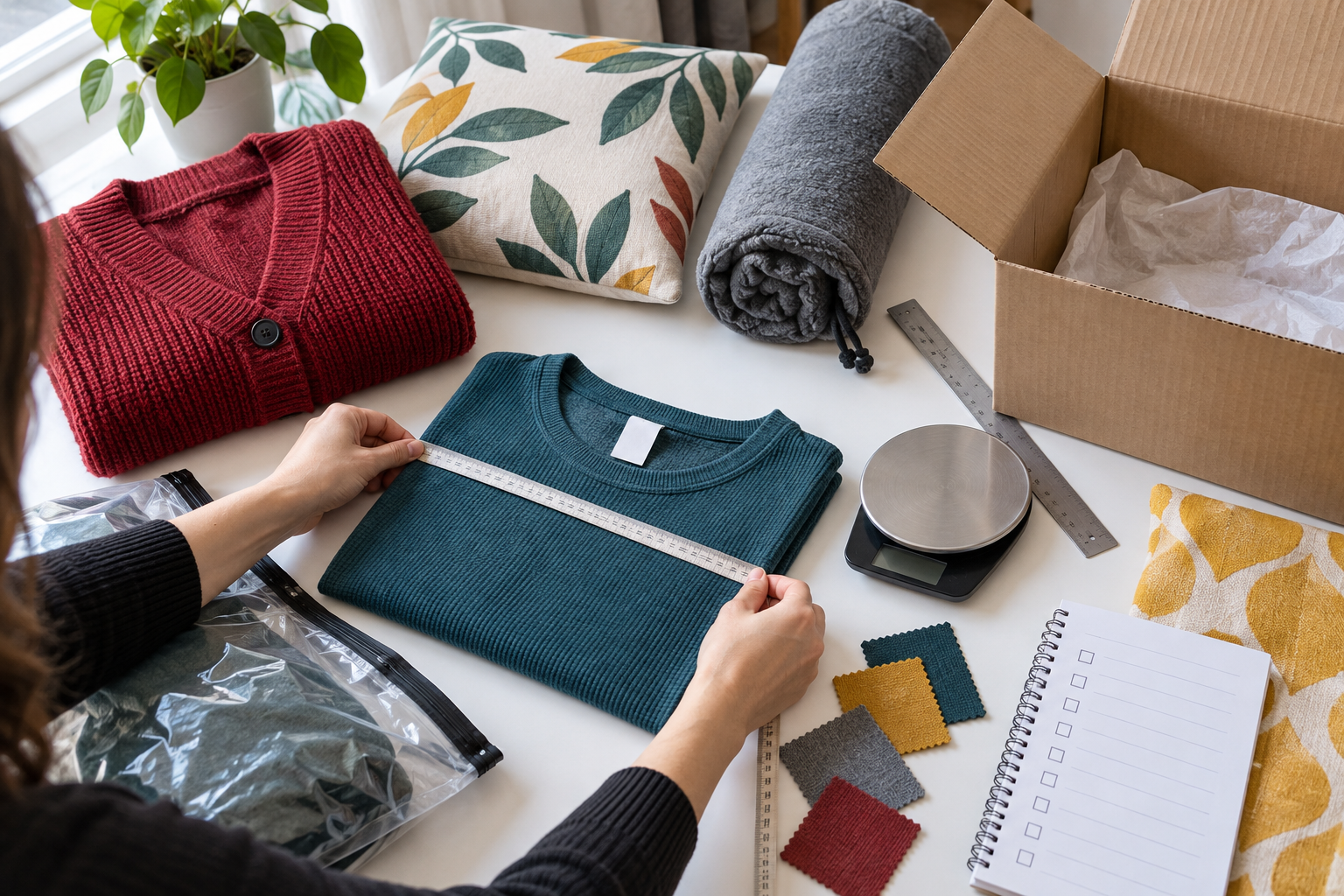
Terms such as “wool feel,” “cloud fleece,” “heat technology,” and “baby fleece” can be marketing language rather than measurable material information. FTC apparel-labeling resources treat fiber content and care instructions as fundamental information. For a cross-border order, use those items as your own minimum questions even when a Taobao seller presents them differently.
Check at least five things for clothing
- Identify the shell, lining, and fill separately. “Contains wool” does not mean that wool is the main fiber.
- Get the percentages. Two wool blends can differ substantially in hand feel, warmth, pilling, and care.
- Use flat garment measurements. Compare chest, shoulder, length, and sleeve in centimeters. For stretchy items, ask whether a number is relaxed or stretched.
- Read the care method. Hand-wash-only, no-tumble-dry, or shrink-prone clothing may be worn much less often.
- Ask for unit gross weight and packing. Fleece and knitwear of similar apparent thickness can differ significantly in mass and bulk.
The most reliable approach is to lay flat a garment you already like and compare the same measurement points. Do not convert the U.S. M you usually wear directly into a Taobao M. Reviewer height and weight may help, but they cannot replace your shoulder, chest, and preferred length.
Check at least six things for home textiles
- Does the price cover one curtain panel, one cushion cover, or a complete set?
- Is the listed measurement the finished size, unfolded fabric size, or size before filling?
- Which dimensions in inches does the duvet cover actually fit? Do not rely only on “single,” “double,” or “queen.”
- Are the duvet insert, pillow insert, or curtain rod included?
- What shrinkage and drying restrictions apply after washing?
- What are the estimated gross weight and outer carton dimensions after removing a gift box or applying suitable compression?
For curtains, also check the hanging method, width per panel, and finished drop. A panel that is too short, or a width that only works after buying two pieces, can erase the value of a low item price.
Before consolidation, remember that light is not the same as inexpensive to ship
Down comforters, pillow inserts, and thick fleece blankets illustrate the problem. They may feel light in your hands while occupying substantial carton space. International shipping often compares actual weight with dimensional weight. DHL publishes an illustrative formula of length × width × height in centimeters ÷ 5000 and charges the higher weight, but that is an example for understanding the concept, not a promise about the current Cainiao U.S. route. Use Cainiao's warehouse measurements, current route rules, and checkout for the actual decision.
I would place every candidate in this small ledger:
| Item to record | Why it changes the value calculation |
|---|---|
| Product price paid and domestic China shipping | This is the starting point, not the delivered total |
| Unit gross weight and packed dimensions | These shape the consolidated parcel's mass and volume |
| Whether a gift box can be removed or the item compressed | It may reduce volume but also reduce protection or affect loft recovery |
| Return window and domestic China return cost | A sizing failure still has a price |
| Current U.S. route, restrictions, and checkout amount | Routes and charges change; an old screenshot cannot answer today's cart |
| U.S. delivered price with tax and return terms | A slightly higher local price can buy certainty and easier returns |
FTC online-shopping guidance likewise says to include shipping, handling, delivery, taxes, and other fees in the total and to review return terms before purchasing. The old assumption that “anything under $800 is automatically duty-free” is also no longer valid. CBP says the United States suspended generally available de minimis duty-free treatment for low-value goods from all countries beginning August 29, 2025. The actual duties, taxes, and fees still depend on the product, classification, origin, declared value, and import process; do not apply one invented percentage to every parcel.
Four questions I would send a seller
- Can you provide a clear photo of the care label for this SKU, showing the shell, lining, and fill percentages?
- With the garment lying naturally flat, what are the chest, shoulder, length, and sleeve measurements in centimeters?
- What are the approximate gross weight and length, width, and height with ordinary packing?
- Without reducing necessary protection, can the gift box be removed or simple packing used?
If the seller cannot provide key data, price the uncertainty into the decision. Do not silently assume the lightest, smallest, and best-fitting case.
A final check that applies in every region
- Am I buying layers for most fall days, or one item suited only to the most extreme day of the year?
- Can the base, mid, and outer layers be used independently?
- Have I confirmed the home's heating system and whether I can control it?
- Did I compare all clothing in centimeters with something I already own, rather than relying on letter sizes?
- Are the shell, lining, fill, care, and shrinkage information clear?
- Are the finished dimensions, piece count, included inserts, and packed size of every home textile clear?
- Do I truly need an electric heating product, and can I verify U.S. voltage, plug, certification, route eligibility, and support?
- After warehouse intake, will I recalculate with the measured weight, dimensions, and current route?
- If the size is wrong, arrival is late, or shipping exceeds the budget, what is my exit plan?
The strongest cross-border candidates are rarely universal “fall must-haves.” They are the items whose measurements can be checked, materials are clearly stated, volume can be controlled, and purpose fills a real gap in your own routine.
I hope this fall leaves you with a few pieces that genuinely work in your home, commute, and climate, rather than a carton of products that merely looked warm on the product page.
Cainiao U.S.-Exclusive Promo Code: USAVE
Shipping to the United States with Cainiao? Enter the U.S.-exclusive promo code USAVE at international shipping checkout. Before paying, confirm that the offer has applied. Eligibility and the actual discount are determined by your current checkout page.
Open Cainiao, check U.S. shipping options, and use USAVE
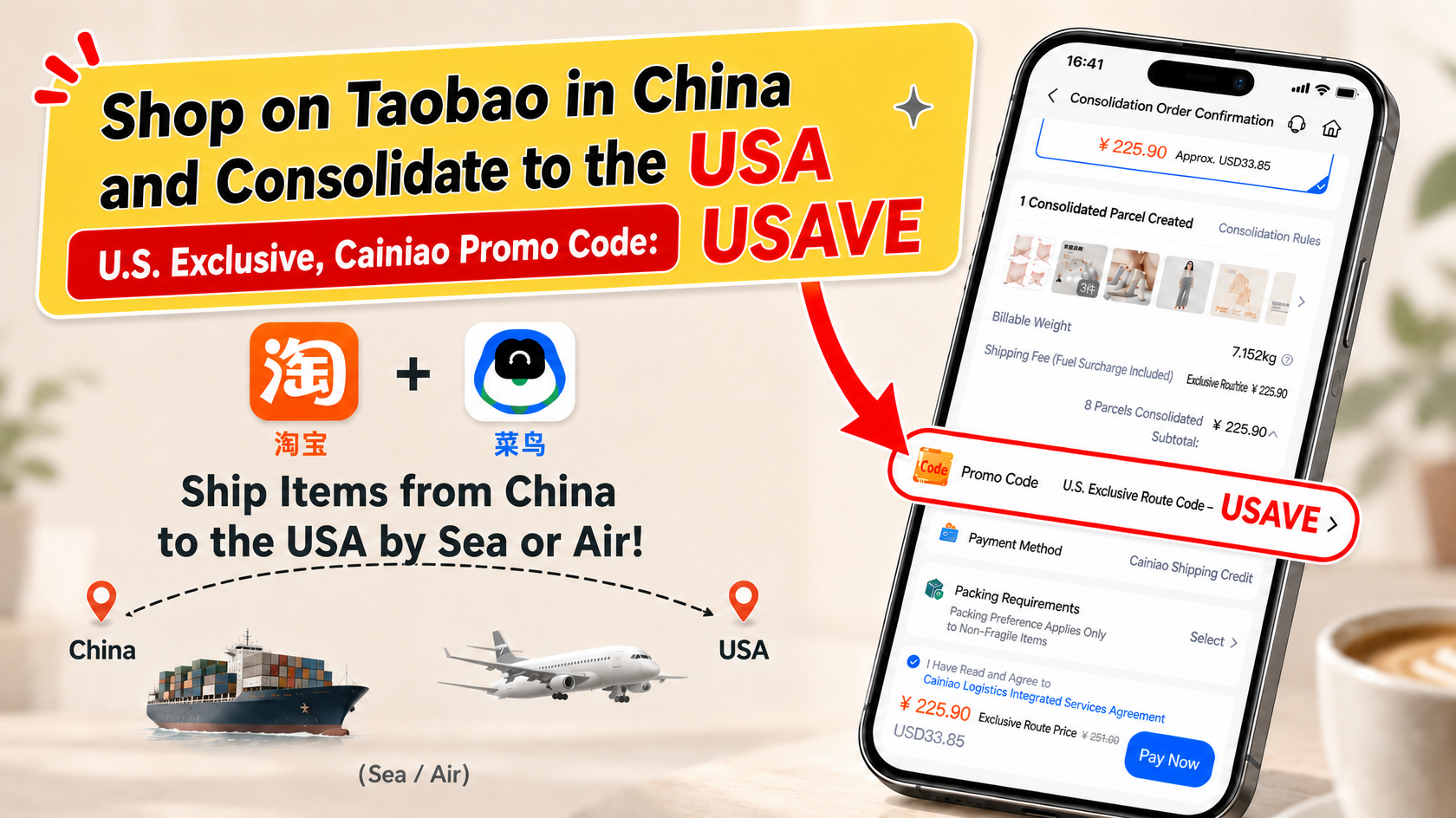
The pictured amounts, weight, and parcel counts are illustrative. Your checkout page determines the actual shipping charges and discount.